Wild Bird Watercolor Clipart Bundle
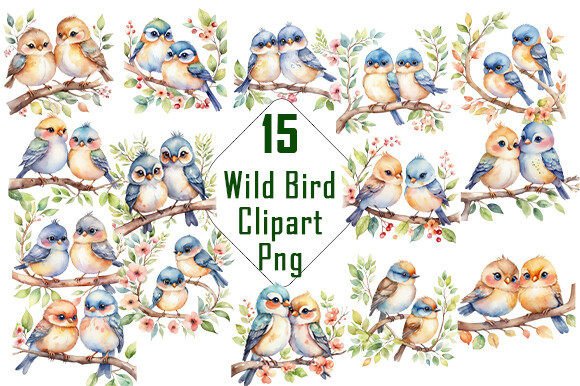
Watercolor textures bring a soft, organic feel to digital projects, and the Wild Bird Watercolor Clipart PNG Bundle captures that aesthetic with a focus on avian subjects. Whether you are building a brand identity, designing social media templates, or creating packaging for a boutique product, this set of hand-painted bird illustrations offers flexibility without sacrificing visual warmth. The bundle provides transparent PNG files, meaning you can drop them into layouts without background cleanup, making them practical for quick turnarounds and layered compositions.
Visual Characteristics and Style of the Wild Bird Watercolor Clipart Bundle
The illustrations in this bundle lean into the natural imperfections of watercolor painting. Brush strokes are visible, colors bleed gently into edges, and each bird has a slightly irregular outline that mimics real pigment on paper. This style works well when you want to avoid the sterile look of vector clipart or the overly polished feel of stock photography. The palette tends toward earthy tones, with muted greens, soft blues, warm ochres, and gentle grays, though some pieces include brighter accents for variety. Each bird appears in natural poses, often perched or in flight, with enough detail to be recognizable but soft enough to blend into backgrounds.
Because the files are PNGs with transparent backgrounds, you can layer them over solid colors, patterns, or photographs. The watercolor effect means they carry a handmade quality that feels approachable and genuine. For designers working on organic product lines, children’s book illustrations, or nature-themed branding, this style communicates a kind of warmth that straight vectors often lack. The birds themselves range from common backyard species like robins and finches to more dramatic figures like owls and blue jays, giving you options for both subtle accents and focal imagery.
Practical Applications Across Creative Projects
Where does a watercolor bird clipart bundle fit into real design workflows? Start with branding. Small businesses, especially those in wellness, outdoor gear, or artisan food, often benefit from a natural, handcrafted identity. Using one of these birds as a logo element can signal authenticity and a connection to nature. For example, a coffee brand might place a watercolor swallow on its bag labels, while a yoga studio could use a hummingbird in its website hero image. The transparent PNG format makes it simple to resize and place without losing the painted effect.
In social media graphics, these illustrations add texture to quote cards, promotional posts, and cover images. A watercolor bird behind a headline creates visual hierarchy naturally, drawing the eye without competing with text. Since the bundle includes multiple birds, you can rotate them across posts to keep the feed feeling fresh while maintaining a consistent brand element. For bloggers and content creators, these clips work well as featured images for articles about travel, nature, or mindfulness. They also function as decorative elements in email newsletters, where a small bird placed next to a call-to-action can soften the overall look.
Print projects are another strong fit. Greeting cards, wedding invitations, and nursery art often benefit from watercolor motifs. The PNG format allows you to print at various sizes, and because watercolor images have softer edges, they scale reasonably well. A stationery line featuring these birds could appeal to customers looking for understated, handmade-style designs. Publishers working on guidebooks or field journals might use the illustrations as chapter headers or margin decorations. The key is that the style feels intentional, not like a generic clipart insert, which adds perceived value to the final product.
How These Illustrations Influence Brand Perception and Engagement
Design assets affect how audiences perceive a brand’s personality. Watercolor elements tend to evoke calm, creativity, and a human touch. When you use the Wild Bird Watercolor Clipart PNG Bundle in a consistent way, you build a brand identity that feels personal rather than corporate. This can improve audience engagement because people respond to visuals that suggest care and craftsmanship. For instance, a nonprofit focused on bird conservation might use these illustrations across its website and fundraising materials to reinforce its mission visually. The watercolor style aligns with themes of preservation and natural beauty, making the message more cohesive.
From a readability standpoint, these cliparts work best when placed strategically. They are not meant for detailed data visualization or complex diagrams. Instead, they support textual content by adding visual breaks and emotional cues. A blog post about migration patterns becomes more inviting when a watercolor swallow floats beside the first paragraph. The hierarchy stays clear because the illustration draws attention without overwhelming the text. For product packaging, the bird becomes a focal point that helps the item stand out on a shelf, especially when competing with more generic designs. Over time, consistent use of these assets builds recognition, as customers start associating the watercolor bird style with your specific brand.
Choosing the Right Assets and Evaluating Project Fit
Before purchasing or using any design bundle, consider your specific project needs. The Wild Bird Watercolor Clipart PNG Bundle includes multiple species and poses, so review the selection to ensure it aligns with your theme. If your project requires a specific bird, like a northern cardinal or a sparrow, confirm that species is included. Also check the color variations. Some illustrations lean warm, others cool. Match the palette to your existing brand colors or the mood you want to create.
Testing file quality is straightforward. Download a sample if available, or look for detail shots that show the resolution at higher zoom levels. Watercolor images can lose clarity when enlarged too much, so know your intended usage size. For web display, 300 DPI is usually sufficient, but for print, you may need higher resolution files. The bundle should specify pixel dimensions. Regarding licensing, confirm whether the bundle covers both personal and commercial use. Many designers need assets for client projects or products they sell, so a commercial license is essential. Look for clear terms about redistribution, especially if you plan to include the illustrations in templates or physical goods for sale.
Pairing Watercolor Clipart with Typography and Other Elements
Integration with typography can make or break a design. Since watercolor illustrations have a soft, organic feel, pairing them with the right font matters. A handwritten script font can complement the painted texture, creating a cohesive handcrafted look. Alternatively, a clean sans serif font provides contrast, letting the illustration breathe without overwhelming it. For example, pairing a watercolor blue jay with a thin, modern sans serif in a logo keeps the design balanced. Avoid heavy serif fonts that might compete with the organic shapes unless you are going for a vintage or rustic feel. Font pairing is about rhythm: let the clipart set the emotional tone and choose a typeface that supports that mood.
Beyond typography, consider how these birds interact with other design assets. They work well alongside geometric shapes, grids, or minimal line art. A watercolor bird placed inside a circle frame becomes a badge. Set against a patterned background, it can serve as a subtle overlay. Because the PNGs have transparent backgrounds, you can stack them with other elements, such as leaves, clouds, or abstract shapes, to build more complex scenes. Just be careful not to layer too many textures, or the design may become muddy. Less is often more with watercolor, as its strength lies in its simplicity.
Practical Recommendations for Designers and Small Business Owners
If you are new to working with watercolor clipart, start with a single illustration and build a small suite of assets around it. Use the same bird across your website header, social media avatar, and business card to establish consistency. For marketers, these visuals can refresh an existing campaign without a full redesign. Swap out a standard photo for a watercolor bird in a seasonal promotion, like using a chickadee in winter or a swallow in spring. The change can catch attention without feeling forced.
When purchasing, look for bundles that offer variety in both species and compositions. The Wild Bird Watercolor Clipart PNG Bundle should ideally include full birds, close-ups, and perhaps some nest or branch elements. This gives you flexibility for layouts. Also, check the file organization. Well-named files save time, especially when you are working on multiple projects at once. Finally, remember that design assets are tools. They work best when you have a clear vision for how they serve your audience. Whether you are creating a logo, a blog header, or a product label, the goal is to use the clipart to communicate something specific about your brand’s personality and values.
In practice, watercolor clipart like this bundle works best in spaces where you want to feel approachable. It is less effective for highly technical or industrial contexts where precision and minimalism dominate. But for nature-centered brands, creative businesses, and personal projects, it offers a way to add texture and emotion without hiring an illustrator. The transparent PNG format reduces technical barriers, letting you focus on composition and message. Keep the style consistent, pair it with thoughtful typography, and you will have a visual toolkit that supports your work across digital and print channels.