Watercolor Appaloosa Clipart for Creative Projects
If you have spent any time browsing design assets, you have likely come across watercolor clipart sets that promise a handcrafted feel. Watercolor Appaloosa Clipart stands out in that crowded space by combining the loose, organic texture of watercolor painting with the distinctive spotted coat patterns of the Appaloosa horse. The result is a design resource that feels both wild and refined, making it a versatile addition to any creative toolkit.
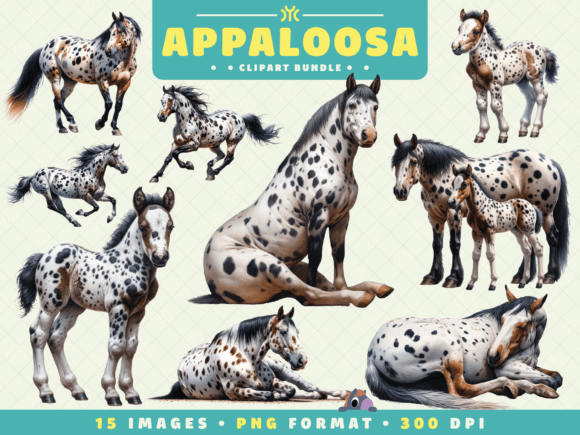
Unlike flat vector illustrations or hyper-realistic renderings, this clipart captures the subtle bleeding, splatter, and transparency effects that make watercolor so appealing. The Appaloosa motif—with its signature blanket patterns, leopard spots, and mottled skin—adds a layer of visual richness that goes beyond generic horse imagery. Each piece in the set carries a personality that feels hand-painted, even when used digitally.
The Visual Character of Watercolor Appaloosa Clipart
What gives this clipart its distinct personality is the interplay between controlled brushwork and happy accidents. The watercolor medium introduces soft edges, color blooms, and varying opacity that no vector tool can perfectly replicate. The Appaloosa patterns are rendered with enough detail to be recognizable—those iconic spots and blankets are clearly present—but they avoid becoming stiff or overly precise.
The color palette typically leans toward earthy tones: deep browns, soft grays, warm ochres, and dusty blacks, often punctuated by the white or cream of the Appaloosa base coat. Some sets include accent colors like teal or rose for a more contemporary twist. This combination of organic texture and recognizable subject matter makes the clipart feel approachable rather than sterile.
From a design perspective, the watercolor treatment adds what many flat illustrations lack: depth. The overlapping washes of color create a sense of dimension, and the irregular edges give each element a handcrafted authenticity. This is not clipart that looks like it was generated from a template. It carries the imperfections that make watercolor so beloved—uneven saturation, subtle granulation, and the occasional unexpected bloom.
Where This Clipart Shines in Real Projects
Watercolor Appaloosa Clipart is not the right choice for every project, but when the context calls for warmth, organic texture, or a rustic-elegant feel, it delivers. Here are the scenarios where it tends to perform best.
Branding for equestrian businesses. If you are designing a logo or visual identity for a horse ranch, riding school, or equine therapy program, this clipart provides an authentic, artisanal look that feels more personal than a generic horse silhouette. The watercolor style signals craftsmanship and care, which aligns well with brands that emphasize connection with animals and nature.
Invitations and stationery. Wedding invitations, baby shower cards, and thank-you notes benefit from the soft, romantic quality of watercolor. The Appaloosa motif adds a unique focal point without overwhelming the layout. Paired with a clean serif or sans serif font, the clipart becomes a natural centerpiece rather than a busy distraction.
Social media graphics and web design. In a digital space saturated with polished, generic stock imagery, watercolor elements stand out. A single Appaloosa illustration used as a hero image or background element on a website immediately communicates a handmade, boutique sensibility. The same applies to Instagram posts or Pinterest pins where texture and authenticity drive engagement.
Packaging for artisanal products. Think small-batch horse treats, organic grooming products, or handcrafted leather goods. The watercolor clipart reinforces the handmade nature of the product itself. It tells customers that the brand values quality and artistry over mass production.
Editorial and publishing projects. Children’s books, equestrian magazines, and lifestyle publications can use the clipart as chapter headers, margin decorations, or full-page illustrations. The watercolor style softens the page and invites readers into a more tactile reading experience.
How Designers Can Evaluate Fit Before Committing
Before you integrate any clipart into a project, it pays to assess a few practical factors. Watercolor Appaloosa Clipart is a specialized asset, so matching it to the right context matters more than with generic vector sets.
Resolution and scaling. Because watercolor clipart often comes as raster images (PNG or JPEG with transparent backgrounds), you need to check the resolution. A set that looks crisp on a phone screen may pixelate when printed on an A3 poster. Look for files that offer at least 300 DPI for print work. Some premium sets also include vector versions that preserve the watercolor texture without resolution loss.
Background transparency. Quality clipart sets provide transparent PNG files so you can layer them over colored backgrounds, patterns, or photographs. Check whether the edges are clean or if there is leftover white halo from poor extraction. A well-made watercolor set will preserve the natural feathered edges of the brushstrokes without hard cutoffs.
Color consistency across the set. If you plan to use multiple pieces in one project, the colors should harmonize without clashing. Some sets deliberately vary the palette for versatility, but you want to avoid pieces that feel like they belong to different collections. Preview the full set before purchasing to ensure tonal cohesion.
Licensing for commercial use. This is non-negotiable. If you are designing for a client or selling products that incorporate the clipart, you need a commercial license. Read the terms carefully—some creators restrict usage on print-on-demand platforms, merchandise, or digital products. A premium clipart set with a clear commercial license saves you legal headaches down the road.
Pairing Watercolor Appaloosa Clipart with Typography
Even though clipart does not function as a typeface, how you pair it with text determines whether the final design feels cohesive or chaotic. The organic, hand-painted nature of watercolor clipart demands complementary typography choices.
Serif fonts work beautifully because they share the clipart’s classic, crafted character. A refined Garamond or a sturdy Georgia can anchor the design while the watercolor element provides visual interest. The contrast between the crisp serif strokes and the soft painted edges creates a balanced hierarchy.
Sans serif fonts offer a modern counterpoint. A clean, neutral sans like Lato or Open Sans keeps the layout from becoming too ornate. This pairing works well for social media graphics or web banners where readability at small sizes matters.
Handwritten or script fonts can feel natural alongside watercolor, but exercise caution. Too many organic elements competing for attention create visual noise. If you use a script, keep it simple and limit the text to short phrases or headlines. For body copy, stick with a legible serif or sans.
Display fonts are best reserved for titles or accent words. A bold, condensed display font can anchor a layout that features watercolor as a background or border element. Just avoid ornate display faces that clash with the clipart’s texture.
Readability and Visual Hierarchy Considerations
One overlooked aspect of working with watercolor clipart is how it affects readability. Because watercolor images have soft, irregular edges, they do not provide the same sharp contrast as vector graphics.
When placing text over or near the clipart, ensure sufficient contrast. A dark watercolor wash behind white text can work if the wash is opaque enough. But if the clipart has transparent or translucent areas, text may become difficult to read. In those cases, add a subtle drop shadow, a semi-transparent overlay, or position the text on a solid background block.
For layouts where the clipart is the primary visual element, let it breathe. Give it enough negative space so it does not compete with surrounding text or other graphics. Watercolor gains its charm from the appearance of spontaneity, but that spontaneity needs room to register without visual clutter.
Practical Recommendations for Using Watercolor Appaloosa Clipart
After working with various watercolor assets across branding and editorial projects, a few patterns have emerged that consistently yield better results.
- Use it sparingly. One well-placed watercolor illustration carries more impact than a page covered in it. Let the clipart function as an accent or hero element rather than a background filler.
- Combine with flat design elements. Pairing watercolor clipart with solid color blocks, simple icons, or clean typography creates a modern juxtaposition. The contrast between organic and geometric keeps the design from feeling dated or overly sentimental.
- Test on different backgrounds. A watercolor piece that looks beautiful on white may lose its punch against a busy pattern or dark background. Always preview the clipart in your actual layout before finalizing.
- Consider the emotional tone. Watercolor naturally evokes warmth, nostalgia, and handmade quality. If your project needs a sleek, high-tech, or corporate feel, this clipart will likely work against that goal. Match the asset to the emotional message you want to convey.
- Invest in a premium set. Free watercolor clipart often comes with lower resolution, limited color options, and restrictive licenses. A premium set gives you better quality, more pieces, and clear commercial rights. For client work or products you plan to sell, the investment pays for itself.
Building a Cohesive Brand Identity with Watercolor Elements
If you are using Watercolor Appaloosa Clipart as part of a broader brand identity, consistency across touchpoints matters. The clipart should feel like it belongs to the same family as your logo, typography, color palette, and imagery style.
One approach is to extract a color palette directly from the clipart. The dominant tones—say, a warm chestnut, dusty gray, and soft cream—can inform your brand colors. This ensures that any additional graphics or photos you use will harmonize with the clipart without requiring extensive color correction.
Another strategy is to use the clipart as a pattern element. Take a single motif, such as an Appaloosa spot pattern or a simplified horse silhouette, and tile it as a subtle background texture. This gives the brand a consistent visual signature without repeating the same full illustration everywhere.
For businesses that produce physical products like apparel, stationery, or home decor, the clipart can be applied directly to merchandise. Watercolor translates well to fabric printing, digital print-on-demand, and even ceramic or paper goods, provided the file resolution is sufficient.
Finally, remember that recognition builds over time. Using the same clipart style across your website, social media, packaging, and print materials creates a unified visual language that audiences begin to associate with your brand. The watercolor texture becomes part of your identity, not just a decorative afterthought.
Watercolor Appaloosa Clipart occupies a specific but valuable niche in the design asset landscape. It offers the warmth and authenticity of hand-painted art with the convenience of digital files. When chosen thoughtfully and applied with intention, it elevates projects that need a tactile, heartfelt quality that standard stock imagery cannot replicate. Whether you are building a brand, publishing a book, or creating one-of-a-kind invitations, this clipart gives you a distinctive visual voice—one that feels personal, crafted, and unmistakably original.