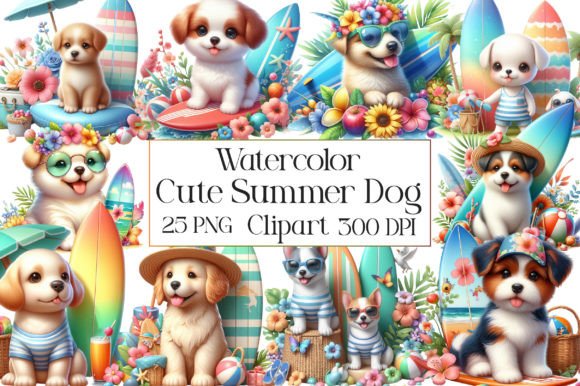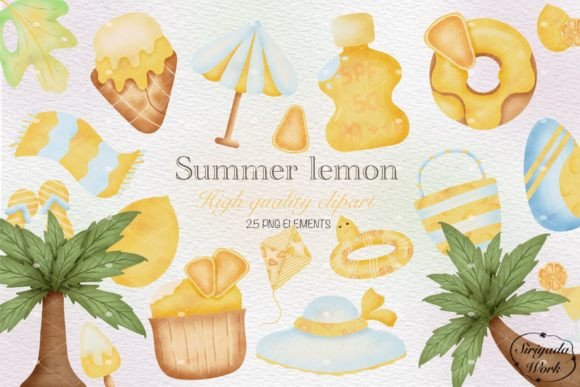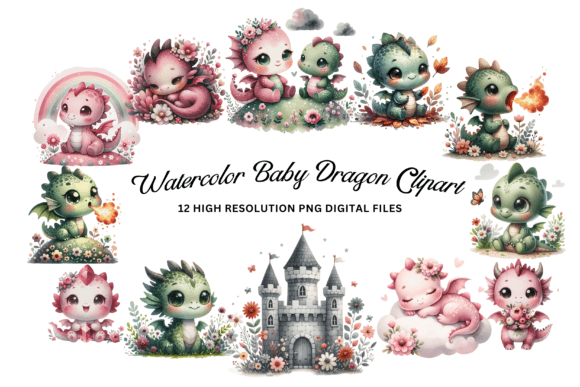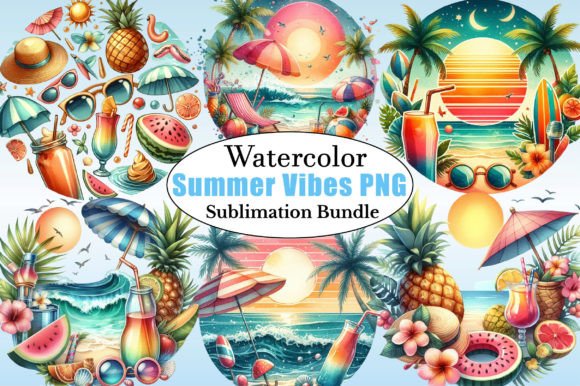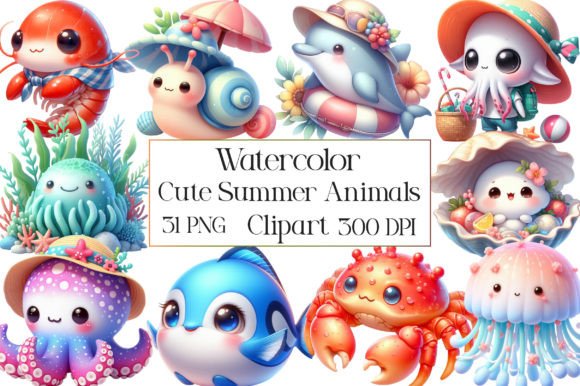
Watercolor Cute Summer Animals Clipart
Watercolor Cute Summer Animals Clipart brings a handcrafted charm that instantly softens any project. These aren’t rigid, vector-style illustrations with harsh outlines. Instead, you get gentle washes of color, subtle bleed effects, and playful animal characters that feel painted on paper. The aesthetic leans whimsical but stays polished enough for professional use. The palette typically includes pastel pinks, ocean blues, sunny yellows, and soft greens—colors that naturally evoke warmth, childhood nostalgia, and seasonal cheer. Whether it’s a sleepy sloth in a floatie or a smiling whale splashing through waves, each element carries an organic, imperfect beauty that connects emotionally with viewers.
What makes this style so appealing is its versatility. The watercolor texture adds depth without overwhelming a layout. The animals themselves are designed to be cute but not saccharine, which means they work across age groups and contexts. You’re not locked into a single use case. This clipart can anchor a brand identity, accent a blog post, or become the centerpiece of a product label. The key is that it feels created, not generated—a quality that resonates deeply with audiences tired of overly polished, generic stock imagery.
Where This Clipart Shines in Creative Projects
If you work in branding, marketing, publishing, or digital content, you’ve likely faced the challenge of finding imagery that feels both unique and approachable. Watercolor Cute Summer Animals Clipart excels in several specific areas. For brand identity, it’s a strong choice for businesses targeting families, children, or lifestyle audiences—daycares, organic food brands, eco-friendly toy lines, or boutique baby shops. The watercolor texture inherently signals handmade quality and care, which can reinforce a brand’s commitment to craftsmanship or natural ingredients.
In editorial design, these illustrations work beautifully in children’s books, parenting magazines, or summer-themed newsletters. They break up text blocks without competing with headlines. Pairing one of these animal characters with a readable serif font for body copy creates a classic, trustworthy feel. For packaging design, consider using a single animal illustration as a focal point. A watercolor flamingo on a juice box or a tortoise on a sunscreen tube immediately communicates the product’s lightness and seasonal relevance. The organic edges of watercolor art also look natural on kraft paper or matte finishes, which many brands prefer for an earthy aesthetic.
Social media graphics benefit enormously from this clipart because it stands out in crowded feeds. A smiling watermelon slice or a surfing penguin works as a profile icon, a story background, or a post accent. The soft texture prevents the image from feeling too digital or artificial, which encourages more engagement. Web design teams can use these elements as hero section backdrops, call-to-action buttons (like a “Shop Summer Sale” banner with a watercolor crab), or loading page illustrations. Because the clipart is provided in high resolution, it scales well for both thumbnail and full-screen use without losing detail.
For personal projects and crafts, the application is nearly limitless. Think wedding invitations with watercolor otters, birthday party decorations featuring toucans and pineapples, or scrapbook pages that capture a summer vacation. Hobbyists and small business owners selling on Etsy or at craft fairs can print these designs on stickers, mugs, t-shirts, or tote bags. The commercial licensing included with most premium watercolor clipart sets means you can use these assets in products you sell without worrying about copyright issues. Always verify the license terms for your specific set, but generally, these packs allow for both personal and commercial use when you purchase from a reputable designer.
How Watercolor Art Influences Brand Perception and Engagement
Visual hierarchy is not only about font sizes and grid systems. The imagery you choose carries its own weight. A display font might grab attention, but the surrounding graphics determine whether that attention turns into interest or trust. Watercolor Cute Summer Animals Clipart offers a low-contrast, soft visual presence that works well as secondary elements in a layout. Eye-tracking studies suggest that people linger longer on pages with organic textures and rounded shapes. The watercolor style introduces a natural imperfection that feels human, which can lower the perceived risk of a brand—especially important for startups or small businesses trying to build trust.
For brand consistency, having a cohesive set of animal illustrations ensures your visuals stay recognizable across platforms. If you use a watercolor bee for your logo, a watercolor honey jar for your packaging, and a watercolor flower for your social media icons, each element reinforces the others. The uniformity of the watercolor technique acts as a visual anchor. Audiences quickly learn to associate that soft, painted look with your brand. Over time, this builds brand recognition more effectively than using disjointed stock images from different artists.
Readability also comes into play. When clipart is overly detailed or high contrast, it can distract from text or confuse the viewer about where to look first. Watercolor illustrations have a built-in gentleness. They don’t scream for attention; they invite it. This makes them ideal for layouts where you want the message—not just the image—to be the hero. For example, a poster advertising a summer camp can feature a watercolor canoe and campfire, but the bold headline in a sans serif font remains the most prominent element. The clipart supports the mood without overpowering the communication.
Practical Guidance for Choosing and Using Watercolor Animals Clipart
Start by evaluating project fit. If your brand voice is formal, minimalist, or monochrome, a colorful watercolor set might clash. But if you aim for friendly, accessible, or nostalgic, it’s a natural choice. Look at the specific animals included. Some sets focus on ocean life, others on safari or woodland creatures. Choose a theme that aligns with your industry or the season of your campaign. For an ice cream shop, a set with flamingos, pineapples, and watermelon slices works perfectly. For a nature center, go with foxes, rabbits, and birds.
Testing font pairings is critical. Watercolor textures pair exceptionally well with handwritten fonts or script fonts because both share a handcrafted feel. If you need contrast, a clean sans serif font creates a modern balance. Avoid mixing with another heavy decorative element—too many textures will clutter the layout. Stick to one or two focal points per composition.
Reviewing included styles matters more than you think. Some clipart sets offer only full-color illustrations, while others include black-and-white line art or transparent PNG versions. For maximum flexibility, choose a set that provides multiple color variations and isolated elements. That way, you can resize, recolor, or overlay your text without losing the integrity of the artwork. Readability considerations apply to the clipart itself—ensure that fine details like whiskers or tiny paws are large enough to be seen clearly in your intended output size. A thumb-sized crab might lose its charm on a business card.
Commercial licensing can make or break a project. Always check whether the license covers print runs, digital downloads, merchandise, or logo use. Most quality watercolor clipart packs from designers on Creative Market, Etsy, or Gumroad offer standard commercial licenses with clear terms. If you plan to resell the clipart as a standalone product, you’ll need an extended license. For most small business owners and content creators, the standard license suffices.
Finally, trust your instincts. If a particular animal or color palette feels forced, it probably is. The beauty of Watercolor Cute Summer Animals Clipart lies in its effortless, joyful nature. When you use it in a context that genuinely fits, the audience will feel that authenticity. A stretched or mismatched application—like using a cartoonish elephant for a serious financial newsletter—can undermine credibility. But when you place that same elephant in a summer savings campaign for a family bank, it becomes a charming, memorable touch that people smile at and remember.
Whether you’re designing a logo for a children’s brand, creating content for an eco-conscious blog, or packaging handmade soap for a summer market, this clipart offers a flexible, emotionally resonant tool. The watercolor aesthetic doesn’t just decorate a page—it communicates care, creativity, and a human touch that polished vector graphics often lack. By choosing the right animals, pairing them with complementary typography, and respecting the texture’s natural boundaries, you can elevate your project from ordinary to genuinely delightful.